What Is an MRI Brain Scan?

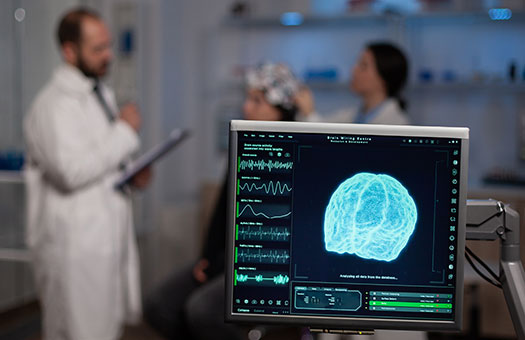
An MRI (magnetic resonance imaging) brain scan, also called a head MRI, is a test used to create high-resolution images of the brain and its surrounding structures in detail. It utilises magnetic fields, strong radio waves, and advanced computer technology in combination to obtain brain visuals without the use of ionizing radiation (unlike X-rays or CT scans). This technique makes the most convenient tests available in today's medical science and medical practices. During an MRI head scan, the patient lies on a movable table that slides into a large cylindrical machine. This machine generates a powerful magnetic field that temporarily realigns hydrogen atoms in the body. Radiofrequency pulses are then used to disturb this alignment. After this, when the atoms return to their original positions, they produce signals that are first seized and then converted into the cross-sectional images of the brain.
Key Features of an MRI Brain Scan:
Why Take an MRI Brain Scan?
You may be advised to take an MRI brain scan if you’re experiencing neurological symptoms such as:
What Does an MRI Brain Scan Measure?
An MRI brain scan measures:
For patients suspected of autoimmune disorders, the MRI for brain antibody test provides critical insights into inflammatory responses in the brain.
Difference Between MRI Brain Scan & CT Scan Brain
| Aspect | MRI Brain Scan | CT Scan Brain |
|---|---|---|
| Technology Used | Magnetic fields & radio waves (no radiation) | X-rays (uses ionising radiation) |
| Image Quality | Provides highly detailed images of soft tissues like brain matter, nerves, and blood vessels | Better for viewing bone structures and fresh bleeding |
| Radiation Exposure | No radiation—safe for pregnant women (with caution) and repeat scans | Uses radiation—limited for frequent use |
| Scan Time | Typically 30–60 minutes | Usually 5–15 minutes |
| Best For | Detecting tumors, infections, multiple sclerosis, aneurysms, inflammation, strokes, brain atrophy | Identifying fractures, hemorrhages, skull trauma, and acute bleeding |
| Contrast Use | Gadolinium-based contrast used to enhance detail (optional) | Iodine-based contrast used, with potential allergy or kidney risks |
| Functional Assessment | Can assess blood flow and brain activity (with specialised sequences) | Primarily structural—less suited for functional analysis |
| Cost Factor | Higher; varies based on lab, region, and contrast use; compare MRI brain scan cost before booking | Generally more affordable; often chosen in emergency situations |
| Use in Emergency Settings | Less preferred due to time and availability | Commonly used due to speed and ease of access |
| Application in Autoimmune Workups | Used in MRI for brain antibody test to detect inflammation or demyelination | Not typically used for autoimmune or inflammatory assessment |
Interpretation of Results
| Aspect | MRI Brain Scan | CT Scan Brain |
|---|---|---|
| Technology Used | Magnetic fields & radio waves (no radiation) | X-rays (uses ionising radiation) |
| Image Quality | Provides highly detailed images of soft tissues like brain matter, nerves, and blood vessels | Better for viewing bone structures and fresh bleeding |
| Radiation Exposure | No radiation—safe for pregnant women (with caution) and repeat scans | Uses radiation—limited for frequent use |
| Scan Time | Typically 30–60 minutes | Usually 5–15 minutes |
| Best For | Detecting tumors, infections, multiple sclerosis, aneurysms, inflammation, strokes, brain atrophy | Identifying fractures, hemorrhages, skull trauma, and acute bleeding |
| Contrast Use | Gadolinium-based contrast used to enhance detail (optional) | Iodine-based contrast used, with potential allergy or kidney risks |
| Functional Assessment | Can assess blood flow and brain activity (with specialised sequences) | Primarily structural—less suited for functional analysis |
| Cost Factor | Higher; varies based on lab, region, and contrast use; compare MRI brain scan cost before booking | Generally more affordable; often chosen in emergency situations |
| Use in Emergency Settings | Less preferred due to time and availability | Commonly used due to speed and ease of access |
| Application in Autoimmune Workups | Used in MRI for brain antibody test to detect inflammation or demyelination | Not typically used for autoimmune or inflammatory assessment |
Choosing Between MRI and CT:
Moreover, if you're looking to save on diagnosis costs, comparing both MRI brain scan costs and CT scan prices across diagnostic centers can help you find the most suitable and affordable option
Risks Associated with MRI Brain Scan
Although MRI brain scans are considered safe, minor risks include:
It’s essential to inform your technician about implants, pregnancy, or kidney issues before your scan.
What Makes an MRI Brain Scan Unique?
In comparison to other imaging techniques, an MRI brain scan provides superior detail in soft tissue structures, making it the preferred diagnostic tool for a variety of neurological conditions. It’s highly sensitive to abnormalities in brain tissue, such as:
In cases where autoimmune conditions are suspected, a specialised scan known as an MRI for brain antibody tests may be conducted to detect specific inflammatory responses in the brain tissue. Whether you're experiencing symptoms like unexplained headaches, dizziness, seizures, or cognitive decline—or if your doctor suspects a deeper neurological condition—an MRI brain scan is often the first step in reaching a reliable diagnosis.
When Is an MRI Brain Scan Performed?
A brain MRI test is typically ordered as part of a neurological examination. Your neurologist might order a brain MRI scan in case of unexplained neurological conditions. With the MRI brain scan, the neurologist can identify the underlying cause of the neurological condition. The MRI scan of your brain is also recommended when the doctor wants to follow up on a disease, such as multiple sclerosis, to see if the disease is progressing or under control. Your doctor may also order an MRI test for your brain during the diagnosis of brain infections or a tumor. The test helps detect any tumor developing inside your brain or to check for infections. This test is also helpful after a traumatic injury and is suggested for pre-surgical mapping of brain functions. In certain conditions, an MRI for a brain antibody test may also be included in the assessment to identify inflammation or demyelination.
Book a MRI Brain Test
| City Name | Price (₹) | |
|---|---|---|
| Delhi - NCR | ₹6000 | |
| Jaipur | ₹5500 |
Frequently Asked Questions/FAQs
1. What is an MRI Brain Scan used for?
An MRI brain scan is used to detect brain tumors, strokes, aneurysms, multiple sclerosis, inflammation, infections, and structural abnormalities. It helps in diagnosing neurological conditions with high accuracy.2. Is a Brain MRI test painful or uncomfortable?
No, the brain MRI test is completely painless. However, you may hear loud sounds from the machine and need to lie still inside a tunnel-like scanner for 30–60 minutes.3. Do I need to fast before an MRI Brain Scan?
Fasting is not usually required unless you're having a contrast-enhanced MRI brain scan. In such cases, your doctor or technician may advise you to avoid food and drink for a few hours.4. What is the difference between an MRI Brain Scan and a CT Scan of the brain?
An MRI uses magnetic fields and radio waves to produce detailed images of brain tissue, while a CT scan uses X-rays and is better suited for detecting bone fractures and acute bleeding. MRI is preferred for detecting soft tissue problems and neurological disorders.5. How long does it take to get MRI Brain Scan results?
You can usually expect the results within 24 to 48 hours. A radiologist reviews the images and shares a report with your doctor for further interpretation.6. Is an MRI Brain Scan safe during pregnancy?
MRI is generally considered safe during pregnancy, especially after the first trimester. However, unless it’s medically urgent, most doctors avoid performing it during the early stages of pregnancy, particularly with contrast.7. Can a Brain MRI Scan detect anxiety or depression?
While an MRI cannot directly diagnose mental health conditions like anxiety or depression, it can rule out physical brain issues such as tumors or lesions that may be contributing to symptoms.8. Can children undergo an MRI Brain Scan?
Yes, children can safely undergo an MRI brain scan. In some cases, mild sedation is given to help them stay still during the procedure. Pediatric-friendly MRI machines or distraction techniques may be used in child-focused facilities.9. What if I feel claustrophobic during the MRI Head Scan?
If you are prone to claustrophobia, inform your doctor in advance. They may recommend a mild sedative or suggest an open MRI if available. Earplugs, music, or a calming environment can also help reduce discomfort.10. Will I need a referral for a Brain MRI Test?
In most cases, yes. A referral from a neurologist, general physician, or specialist is required to get an MRI brain scan, especially if you plan to claim insurance or undergo a contrast-enhanced scan.
Conclusion
An MRI brain scan is a powerful, non-invasive diagnostic tool that helps detect a wide range of neurological conditions—from brain tumors and stroke to autoimmune disorders and degenerative diseases. Whether recommended for symptoms like chronic headaches, seizures, or memory issues, a brain MRI test offers unmatched accuracy and detailed imaging. Understanding the procedure, benefits, risks, and interpretation of results helps patients feel more confident and informed. It’s also important to compare the MRI brain scan cost and choose the right diagnostic center based on accuracy, convenience, and affordability. With online platforms now allowing you to check brain scan MRI price from top labs and even book from the comfort of your home, getting the right test at the right price has never been easier. If your doctor has advised a brain scan or you're considering an MRI for a brain antibody test, don’t delay. Early detection leads to better outcomes. Take control of your brain health, explore your options, compare MRI head scan packages, and book with convenience.