MRI Knee Both Joints

Collapse

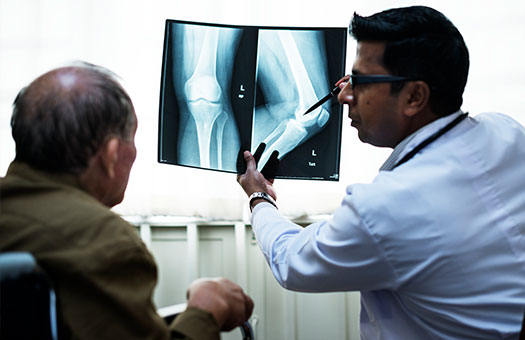
Magnetic resonance imaging (MRI) of both knee joints is a technique used to create images of your knees, which include bones, muscles, cartilage, tendons, ligaments and blood vessels. This scan is done to diagnose health issues related to your knee, such as ligament tears, cartilage damage, arthritis, tumors, or knee injuries, without needing to do surgery. This scan is completely painless, quick and generally considered safe. This scan is sometimes recommended to people who are experiencing pain for a long time in their knee joints or have had any knee injury in the past. If the doctor detects any serious abnormalities, they may recommend further surgical treatment. This scan captures images of both the right and left knee joints, helping doctors evaluate any abnormalities. Unlike X-rays, this scan does not use any radiation. The results from both knee joint MRI scans can be stored in the computer or printed on film. There are different types or sequences of both knee joints MRI, which include standard MRI, MRI with contrast and Specific MRI Sequences- T1-weighted, T2-weighted, Proton Density (PD)-weighted MRI, STIR (Short Tau Inversion Recovery), or Fat-Suppressed Sequences. The type of MRI or sequence used depends on what your doctor needs to evaluate based on your condition. These specific types or sequences used for your MRI depend on the decision taken by your doctor based on your medical history.

Why The Test Is Performed?

Collapse

This test is usually suggested by doctors when:

1 :If you are experiencing persistent pain in joints, swelling, or trouble walking, an MRI of both knee joints is recommended.
2 :An MRI of both knee joints is also performed when a person has a sports injury or trauma from an accident. The MRI of both knee joint scans checks the depth of the damage.
3 :MRI of both the knees also checks for conditions such as arthritis, psoriatic arthritis, or other inflammatory arthropathies that affect your joints. An MRI of Both Knees helps check the severity of joint involvement in such diseases.
4 :If you are already going through the MRI procedure, then the doctor may do it again to recheck the current condition of your joints.

What are the common factors that raise the risk of knee problems?

Collapse

Generally, knee problems occur due to daily habits or some unusual conditions.

Ageing :Just like our elders, the knee problem generally sets in with age.
Accidents or Fractures :The kneecap can be broken due to fractures that occur after accidents. Also, people whose bones are weakened by osteoporosis can sometimes sustain a knee fracture simply by stepping wrong.
Overweight or Obesity :Being overweight puts unnecessary pressure on knee joints.
Overuse or Repetitive Movements :Overdoing some knee exercises in the wrong position, frequent running, and squatting can also cause trouble to your knees.
Genetic Factors :If your family has a history of arthritis or joint-related severe problems, then you might get it too.
Certain Occupations :Jobs that require heavy lifting, climbing, or long hours standing can affect knee health.
Wearing the Wrong Footwear :Regular and overuse of high heels or poor arch support can misalign your posture and strain the knees.

How the MRI of Both Knees Is Performed

Collapse
Preparation :No special preparation is required while performing an MRI of both knee joints. You may be asked to remove the metal objects because they can create a hindrance while performing the scan.
Positioning :You will be asked to lie down on a flat moving table. Your legs should be positioned properly without moving them here and there unnecessarily, so that both knees are centered inside the MRI scanner. Cushions or pads may be used to give your knees better support.
Entering the MRI Machine :After this, your table will be slowly pushed into the MRI machine for scanning of both knee joints. The machine is a large, tunnel-like structure with radio waves to take detailed images of the inside of your knees.
During the Scan :During the scan, you are expected to stay still and relaxed. In case of any panic, please consult with your healthcare provider for better support. During the scan, you will be given earplugs or headphones to reduce the noise. In some cases, the contrast dye may be injected into your vein in your arm to enhance the quality of the images. It is suggested, especially if your doctor wants to examine blood vessels or soft tissues more clearly.
After the Scan :Once the scan is complete, you can resume normal activities. The results will be disclosed to you once your doctor reviews the scan results and will call you for further evaluation or treatment if needed, based on your findings.

Tips for Healthy Knees and Strong Joints

Collapse

Knee joints are the largest and complex joints in our entire body. Our knee makes it possible to move, dance, pedal, jump, or run-all while bearing the heavy weight of our bodies. There are ways to protect knee health and minimize the risk of knee-related issues. Practicing a healthy and disciplined lifestyle is the key to healthy knee joints. A few steps to maintain good knee health are:

Get Moving :Your joints are designed for movement and they are healthy when you keep moving. When you are sitting idle, movement protects your knees from stiffness, relieving pain, reducing some weight, improving balance, and decreasing your risk of falls or injuries to the knees and other knee joints. It is important to pick exercises that are gentle and easy to do.
Maintain a Healthy Weight :Maintaining a healthy weight is very important for the health of your knee joints. Research shows that even if you shed a little weight while you move and maintain a healthy weight, your knee health improves over time. In one study, obese adults who shed 20% of their body weight reported less pain than those who lost less than 5% of their body weight.
Treat Knee Injuries Timely :If you are injured because of any kind of injury in your knees, then it is important to treat your knees by giving proper care, such as by resting, applying ice and compression, using pain-relieving ointments or medications, or elevating your knees at a proper angle.
Take Care in Selecting Footwear :While you go and select your footwear, it is very important to choose according to the comfort of your heels. The wrong footwear can cause you pain, which can last longer than expected in your knee joints. It also may increase your risk of developing osteoarthritis. It is always good to choose shoes instead of high heels or imbalanced footwear. Look for shoes that are well cushioned, soft on your heel, relaxing on your toe area, and flexible at the ball of the foot. For foot or knee pain, consider a shoe insert or orthotic. A physical therapist can recommend the best one for you.
Practice Good Posture :Nowadays, the majority of people live a sedentary lifestyle and barely get an opportunity to move or maintain good posture, even when sitting in a chair for long hours. Practicing good posture should be a habit that can be developed over time by practicing it. To practice good posture, stand up straight with your shoulders back. Your shoulders should be in line with your body and should not lean forward or backward. While sitting, keep your back straight against the chair and your feet should be flat on the floor. A physical therapist can teach you exercises to improve your posture. A physical or occupational therapist can also help you arrange your workspace to improve posture and relieve joint stress on the job.
Kick the Unhealthy Habit :Kick the unhealthy habit of smoking regularly, consuming alcohol excessively, and eating unhealthy food, because if you practice all these unhealthy habits, then knee joint health is yet another reason to quit those habits. For almost two decades, research has connected smoking with more severe pain and joint damage in both osteoarthritis and rheumatoid arthritis.

Illnesses & Conditions Diagnosed with MRI of Both Knees:

Collapse
1 :Ligament Tears
2 :Meniscus Tears
3 :Cartilage Damage
4 :Osteoarthritis
5 :Bone Fractures
6 :Tendon Injuries
7 :Rheumatoid Arthritis
8 :Joint Effusion
9 :Cysts Or Tumors
10 :Bone Marrow Edema

Book a MRI Knee Both Joints Test

Collapse
City NamePrice (₹)
Delhi - NCR₹13000
Jaipur₹11000

Frequently Asked Questions/FAQs

Collapse
  • 1. Is an MRI of both knees painful?

    No, an MRI of both knees is completely painless. If you experience any discomfort during the procedure, it’s best to inform the radiologist or healthcare professional immediately so they can help you stay comfortable.

  • 2. Will I need an injection or contrast dye for the MRI?

    Not always. The use of contrast dye depends on your doctor’s recommendation. It is only used when clearer images of blood vessels or soft tissues are needed.

  • 3. Can I eat or drink before the MRI?

    Yes, in most cases you can eat and drink as usual before the MRI, unless your doctor has specifically advised you to avoid food or drink.

  • 4. Is the MRI machine noisy?

    Yes, MRI machines make loud tapping or knocking sounds during the scan. However, you’ll be provided with earplugs or headphones to make the experience more comfortable.

  • 5. Will both knees be scanned together?

    Yes, both knees are scanned in the same session. You won’t need to change position multiple times, as the scan captures both knees simultaneously for accuracy and convenience.

  • 6. Do I need a doctor's prescription for an MRI of both knees?

    Yes, a doctor’s prescription or referral is typically required before undergoing an MRI of both knees, especially at diagnostic centers or hospitals.

  • 7. Can I have an MRI if I'm pregnant?

    MRI is generally considered safe during pregnancy, but you should always consult your doctor beforehand to ensure it’s appropriate for your specific situation.

  • 8. Is MRI better than X-ray or CT scan for knee issues?

    Yes, MRI provides more detailed images of soft tissues such as ligaments, tendons, and cartilage. X-rays are mainly for bone imaging, while CT scans are used for more specific diagnostic purposes.

Conclusion

Collapse

An MRI of both knee joints is a safe, painless, and highly effective imaging test that helps doctors detect a wide range of knee-related issues, including ligament tears, cartilage damage, arthritis, and other internal problems. It provides detailed images of the bones and soft tissues without using any radiation, making it a preferred diagnostic tool in modern medicine. Whether you’re experiencing ongoing knee pain, recovering from an injury, or preparing for surgery, an MRI can offer valuable insights to guide accurate diagnosis and treatment. If recommended by your doctor, this test can play a crucial role in identifying the root cause of discomfort and helping you return to pain-free movement. Take control of your knee health and book an MRI scan test in your city at an affordable price and get tested early to reduce the risk of any knee-related issues.
Mri Knee Both Joints

MRI Knee Both Joints

7000(Flebo Effective Price)