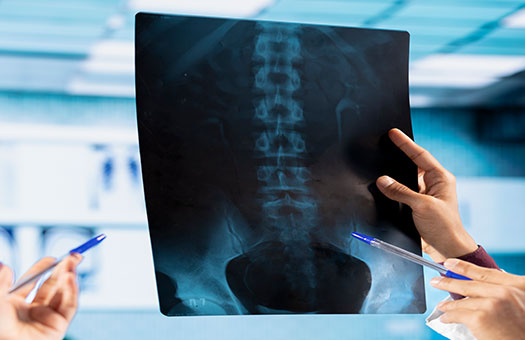
What Is an MRI Whole Spine Test?

The MRI whole spine test is a specialised procedure that captures images in high quality of the complete spinal column, which covers the cervical (neck), thoracic (mid-back), lumbar (lower back), sacral, and coccygeal (tailbone) regions in one single scan. This test uses magnetic fields and waves in the form of radio frequency in the place of x-rays. It makes it free from radiation. This test is more useful in many cases. The scan is performed using a large machine called a Magnetic Resonance Imaging (MRI) scanner, which produces cross-sectional images that help doctors check bones, soft tissues, intervertebral discs, the spinal cord, and nerve roots in detail. This test is beneficial when someone feels signs and symptoms like pain, numbness, weakness, lethargy, or tingling which increase beyond a specific area of the spine or when spinal disorders are suspected or spotted. Just like regular spine MRI scan of your body, which focus on a specific target area, like the lumbar or cervical spine, a whole spine MRI test gives a panoramic view of the spinal anatomy. This allows for exact diagnosis of conditions that may affect various levels of the spine, which includes tumors, infections, inflammatory diseases, or congenital spinal anomalies. The test is typically performed in a supine position (lying flat), and the patient is required to stay still during the process. If contrast is needed to see certain structures or abnormalities, a gadolinium-based dye is administered intravenously. Whether you're suffering from chronic back pain, undergoing cancer screening, or monitoring a known spinal condition, an MRI of the whole spine serves as a powerful tool for early diagnosis and comprehensive evaluation.
What Is MRI of the Whole Spine Used For?
The MRI of the whole spine is commonly used to check the below:
Doctors often recommend a whole spine MRI test when symptoms affect more than one spinal region or when a full evaluation is needed for accurate diagnosis.
Procedure of MRI Whole Spine Test
The MRI Whole Spine Test is a detailed imaging procedure that takes around 45 to 60 minutes, depending on the complexity and whether contrast is used. Here’s what typically happens during the test:
Risks Associated with MRI Whole Spine Test
The Whole Spine MRI Test is generally safe, but some minor risks may include:
There is no radiation involved, unlike CT scans or X-rays.
Interpretation of MRI Whole Spine Test Results
| Finding | Description | Possible Indications | Severity / Concern Level |
|---|---|---|---|
| Disc Bulge / Herniation | Protrusion of intervertebral disc beyond its normal boundary | Degenerative disc disease, nerve compression | Mild to Severe (depending on extent) |
| Spinal Stenosis | Narrowing of spinal canal | Pressure on spinal cord or nerves, especially in elderly | Moderate to Severe |
| Spondylolisthesis | One vertebra slips forward over another | Instability, chronic pain, nerve root compression | Mild to Moderate |
| Degenerative Disc Disease | Loss of disc height and hydration | Age-related wear and tear, chronic back pain | Mild to Severe (progressive condition) |
| Spinal Cord Lesions / Demyelination | Abnormal bright spots in spinal cord on T2-weighted images | Multiple sclerosis, neuromyelitis optica | Moderate to Severe |
| Vertebral Fractures | Breaks or cracks in vertebrae | Trauma, osteoporosis, tumors | Mild to Critical (based on location) |
| Infections / Inflammation | Abnormal enhancement in vertebrae or discs post-contrast | Tuberculosis, discitis, osteomyelitis | Moderate to Critical |
| Spinal Tumors / Masses | Abnormal growths within or surrounding spinal cord or vertebrae | Metastasis, primary spinal tumors, lymphoma | Severe to Critical |
| Syrinx / Syringomyelia | Fluid-filled cyst within the spinal cord | Can cause progressive nerve damage if untreated | Moderate to Severe |
| Chiari Malformation | Downward displacement of cerebellar tonsils into spinal canal | Often congenital, may require surgical correction | Mild to Severe |
| Cord Compression | Direct pressure on the spinal cord | Disc herniation, tumor, trauma | Severe to Critical (urgent attention) |
| Arthritis / Facet Joint Hypertrophy | Thickening of joints between vertebrae causing stiffness and pain | Osteoarthritis, ankylosing spondylitis | Mild to Moderate |
| Congenital Abnormalities | Structural defects in spinal formation | Spina bifida, tethered cord syndrome | Mild to Critical (based on condition) |
Why Take an MRI of the Whole Spine?
There are multiple medical reasons to take an MRI of the whole spine, including the below:
It provides a holistic view of your spine, which is particularly useful when the origin of symptoms is unclear.
When Is an MRI of the Whole Spine Test Performed?
Doctors may recommend this scan in the following cases:
A full spine MRI report can reveal the source of symptoms that are often hard to localise.
Book a MRI Whole Spine Test
| City Name | Price (₹) | |
|---|---|---|
| Delhi - NCR | ₹18000 | |
| Jaipur | ₹14500 |
Frequently Asked Questions/FAQs
1. Is an MRI Whole Spine Test painful?
No, the test is completely painless. You may hear loud sounds from the machine, but you won’t feel any discomfort. If contrast is used, you might feel a slight sensation during injection.2. How long does a Full Spine MRI Scan take?
A full spine MRI scan usually takes around 45 to 60 minutes. If contrast is used, it may take a little longer.3. Do I need a doctor’s prescription for this test?
Yes, an MRI is typically done on a doctor’s referral. You’ll need a prescription, especially if you are booking a whole spine MRI test through a diagnostic platform.4. Can I eat or drink before the test?
Yes, unless contrast is being used. If contrast dye is required, your doctor or lab may ask you to avoid food for 4–6 hours before the test.5. Will I need contrast dye for this scan?
Not always. Contrast is only used if your doctor wants to view certain details more clearly—like tumors, infections, or inflammation. This is known as a contrast-enhanced whole spine MRI test.6. When will I get my Full Spine MRI Report?
You will usually receive your full spine MRI report within 24 to 48 hours after the scan. Some centers also offer same-day reporting or online access through apps or email.7. Can children or elderly patients undergo this test?
Yes, the test is safe for both children and older adults. However, in cases of claustrophobia or anxiety, sedation may be considered under medical supervision.8. What does an MRI of the whole spine show?
An MRI of the whole spine shows detailed images of your spinal cord, vertebrae, discs, nerves, and surrounding soft tissues. It can detect disc herniation, tumors, infections, multiple sclerosis, and more—all in one comprehensive scan.9. What is the difference between a local spine MRI and a whole spine MRI?
A local spine MRI (e.g., lumbar or cervical only) focuses on one region, while a whole spine MRI test covers the entire spinal column. Your doctor may suggest a full scan if symptoms affect multiple areas or if a systemic condition is suspected.10. What should I wear to the scan center?
Wear loose-fitting, comfortable clothes without zippers or metal fastenings. You’ll likely be asked to change into a gown to avoid any interference with imaging.
Conclusion
An MRI Whole Spine Test is a powerful and non-invasive diagnostic tool that offers detailed insights into the entire spinal column from neck to tailbone. Whether you’re dealing with chronic pain, nerve issues, or neurological symptoms, this test can help pinpoint the root cause with high accuracy. It is especially beneficial when symptoms affect multiple regions or when early detection of serious spinal conditions is essential. Understanding the MRI whole spine test cost, comparing centers, and choosing the right provider can help you make an informed decision. Platforms like Flebo.in simplify this process by letting you compare the whole spine MRI price, view ratings, and book a spine MRI scan near you with ease. If your doctor has recommended a full spine MRI scan, don’t delay. Timely testing and accurate diagnosis are the first steps toward better spinal health. Book your scan today and take charge of your well-being.