NCCT Head / CT Head Contrast

When a headache just won't go away or a blunt injury creates worry, your doctor might order a CT head scan. But what is it? And why are there various kinds, such as NCCT head and CT head with contrast?
What is a CT Scan?
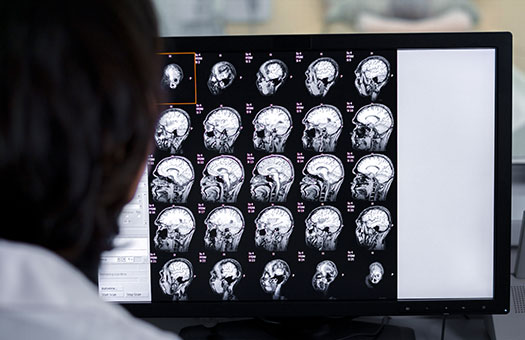
Let's begin at the beginning. A CT scan (Computed Tomography) of the head is a diagnostic imaging examination that employs X-rays to produce detailed cross-sectional images of the brain, skull, sinuses, and blood vessels.Unlike a standard X-ray, which yields a single flat picture, a head CT scan yields many layered pictures, enabling your health-care provider to look inside your brain and identify abnormalities with much more accuracy.
The 2 main types of head CT scans
Both serve various diagnostic functions, and both have the potential to be a vital part of knowing what's happening inside your head. NCCT head is shorthand for Non-Contrast Computed Tomography of the head. Another way to put it is that it's a CT brain scan without any dye or contrast substance.
Why need a NCCT Head or a CT Head with Contrast?
Procedure of having an NCCT head scan
For NCCT Head:
Procedure of having an CT head contrast
For CT Head with Contrast:
The whole process typically lasts 10 to 30 minutes, depending on the type of scan.
You can be recommended to have a CT brain scan if you are having
It can be lifesaving in emergency situations. In planned diagnostic tests, it's precious in enabling your physician to view the whole picture.
Are there any side effects of an NCCT Head/ CT Head Contrast?
For the vast majority of individuals, a CT is safe as it includes low levels of radiation, which are safely regarded in adults when used reasonably. The contrast dye administered during CT brain with contrast scans is likewise safe for the majority of individuals, but occasional allergic reactions can develop. Be sure to let your physician know if you have:
When would your healthcare provider order an NCCT Head or CT Head Contrast?
It’s usually the first-line imaging test when:
Since there’s no injection involved, the NCCT head scan is quick, non-invasive, and relatively safe, especially for emergency situations where time is of the essence. Now, picture attempting to see a small detail in a black-and-white photo. Occasionally, it's simply too fine. That's where contrast-enhanced CT scans are helpful. In a CT head with contrast (or CT brain with contrast), a contrast dye (typically iodine-based) is injected into your vein prior to the scan. This contrast agent causes certain regions of the brain and blood vessels to be more easily visible, enabling the detection of: Brain masses or tumors, Infections such as abscesses or encephalitis, Inflammation or autoimmune disorders, Vascular conditions such as aneurysms or clots, Post-operative procedures or complications Imagine the contrast scan as a spotlight uncovering things that could remain unknown in the shadows of a non-contrast image.
Is this costly?
NCCT Head scans are generally cheaper, as no dye or other procedures are needed.CT brain with contrast scans can be more expensive with the use of contrast materials and increased scan time.
Book a NCCT Head / CT Head Contrast Test
| City Name | Price (₹) | |
|---|---|---|
| Delhi - NCR | ₹3500 | |
| Delhi - NCR | ₹5250 |
Conclusion
A head CT scan is more than a medical exam; it's a glimpse into your brain's well-being. Whether an NCCT head scan during a crisis or a CT head contrast scan to investigate deeper problems, it gives valuable information that enables physicians to diagnose and treat you more effectively.