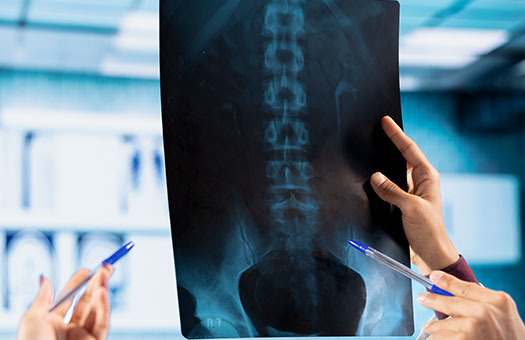
What is a NCCT Pelvis/ CT Pelvis?

NCCT is short for Non-Contrast Computed Tomography. In simpler words, it's a form of CT scan (or CAT scan) that uses X-rays to obtain detailed images of your pelvic area, but without contrast dye. So, what exactly is the pelvis? It's the lower section of your torso, the space between your abdomen and thighs. It contains bones such as the hip bones and sacrum, plus muscles, blood vessels, reproductive organs, and components of the digestive and urinary systems. A CT Pelvis scan provides physicians with a clear, cross-sectional image of this area. It's sort of like cutting the body into thin sections and looking at each one in tremendous detail, something a standard X-ray can't accomplish.
Why is a NCCT Pelvis/ CT Pelvis advised?
Your health-care provider might prescribe an NCCT Pelvis for a number of reasons. Here are some of the most prevalent:
Let’s now understand the difference between NCCT and CECT Pelvis?
You may hear of CECT Pelvis too, that's a Contrast-Enhanced CT scan. The difference comes in the application of contrast dye, which is typically injected to make blood vessels or specific tissues more visible. An NCCT Pelvis does not require a contrast dye. It is helpful when:
Your doctor will choose the appropriate test based on what they’re looking for.
What happens before, during and after the scan
The test is rapid, painless, and does not require a needle. Here's what typically occurs:
Your health-care provider might prescribe an NCCT Pelvis if he or she suspects
It's not a routine scan; it's typically recommended when symptoms require more definition or when other scans (such as ultrasound or X-ray) don't provide enough information. A CT scan is generally safe for most individuals. Yet, they do expose you to more radiation than a routine X-ray, so physicians only order them when it's really necessary. The radiation risk is minimal, particularly for a one-time scan, but it never hurts to inform your physician of your history and prior scans.
A NCCT Pelvis scan helps with
An NCCT Pelvis scan is a strong diagnostic technique that enables physicians to get a better look at what's going on in your lower abdominal and pelvic area. Pain, injury, or a health issue that needs to be clarified with this test, which provides accurate information that can lead to improved treatment.
Book a NCCT Pelvis/ CT Pelvis Test
| City Name | Price (₹) | |
|---|---|---|
| Delhi - NCR | ₹3500 | |
| Jaipur | ₹5000 |