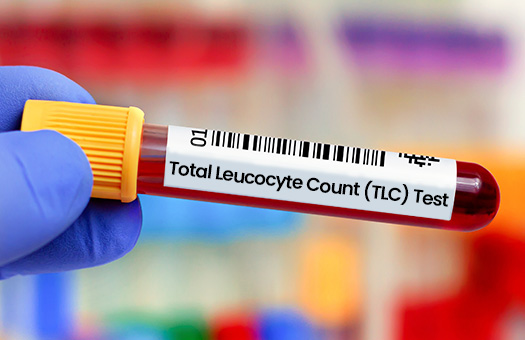
What Is the Total Leukocyte Count (TLC) Test?

The total leukocyte count (TLC) test is a blood test which needs to be taken as a routine health checkup that measures the number of white blood cells (WBCs) present in a person’s bloodstream. WBCs are important cells in a person's blood. White blood cells, which are also known as leukocytes, are an important part of the immune system. Against infection, they protect the body. The infection is caused by bacteria, viruses, fungi, and parasites, so we can say that WBCs are actually a very important part of your blood. These cells also play a role in allergic reactions, inflammation, and immune system regulation. The TLC test is one of the most basic yet important tests done in both outpatient and inpatient settings. It helps in checking the infections and also monitors immune system disorders. It evaluates the body's response to various treatments. It is commonly included as part of a complete blood count (CBC) test, which gives a broader overview of an individual’s hematological health. White blood cells develop in the bone marrow and go through the blood and lymphatic systems. The TLC blood test provides a total count of these cells without differentiating between the five types: neutrophils, lymphocytes, monocytes, eosinophils, and basophils. If needed, a differential leukocyte count (DLC) can be done to check each type separately.
Flaws in TLC test results, whether increased or decreased counts, can indicate a variety of conditions:
What Is the Total Leucocyte Count (TLC) Test Used For?
The TLC blood test is mostly used to:
Because of its role in detecting abnormalities in white blood cell count, the test is vital in routine health checkups and clinical diagnoses.
Understanding High & Low TLC Count
| TLC COUNT RANGE | Interpretation | Possible Causes |
|---|---|---|
| Below 4000 cells/μL | Low TLC Count (Leukopenia) | Viral infections, autoimmune diseases (e.g., lupus), bone marrow disorders, chemotherapy, certain medications (e.g., antibiotics, anticonvulsants) |
| 4000 – 11000 cells/μL | Normal TLC Count | Indicates a healthy immune system with balanced white blood cell levels |
| Above 11000 cells/μL | High TLC Count (Leukocytosis) | Bacterial infections, inflammation, tissue damage (e.g., burns), leukemia, physical or emotional stress, steroid use |
Why Take a Total Leukocyte Count (TLC) Test?
You might require a TLC test in case you are showing symptoms in your body such as
An unexplained increase or drop in WBC count could be a possible sign of an issue related to your body, which makes this test an important part of a routine health checkup.
When Is a Total Leucocyte Count (TLC) Test Performed?
Doctors often recommend the TLC blood test:
What Does Total Leucocyte Count (TLC) Test Measure?
The TLC test measures the number of white blood cells in one microliter (µL) of blood. White blood cells are classified into five types: neutrophils, lymphocytes, monocytes, eosinophils, and basophils. The test provides an overall count, helping to assess if there is an infection or immune system disorder.
Procedure of Total Leucocyte Count (TLC) Test
The Total Leucocyte Count (TLC) test is a straightforward diagnostic procedure involving the collection and analysis of a blood sample to assess the total number of white blood cells in the body. This test is often included as part of a broader Complete Blood Count (CBC) test, especially when doctors suspect infection or immune dysfunction.
The Total Leucocyte Count (TLC) test is a quick, safe, and essential diagnostic tool for detecting infections, monitoring immune responses, and identifying abnormalities such as a high TLC count or low TLC count, which may require further evaluation or treatment. Its simplicity and effectiveness make it a commonly recommended part of routine and emergency blood testing.
Risks Associated with Total Leucocyte Count (TLC) Test
The Total Leucocyte Count (TLC) test is a very safe and routine blood test with minimal risks involved. Since it only requires a small blood sample, the procedure is generally well-tolerated by most individuals. However, like any blood draw, there can be some minor side effects. The most common include slight pain or discomfort at the site of the needle insertion, along with mild bruising or swelling. In rare cases, a small lump or hematoma may develop under the skin due to blood leakage. Some people may also experience light-headedness or dizziness, especially those who are anxious about needles or have a history of fainting during blood tests. There is also a very minimal risk of infection at the puncture site, though this is extremely rare when proper sterile techniques are followed. Overall, the TLC blood test is considered low-risk, and any side effects are usually temporary and resolve on their own without medical intervention.
Benefits of Getting a Total Leucocyte Count (TLC) Test
There are multiple benefits of undergoing a Total leucocyte count test:
Because changes in white blood cell count can signal serious health conditions, this test plays a vital role in preventive healthcare.
Book a TLC Test
| City Name | Price (₹) | |
|---|---|---|
| Delhi - NCR | ₹50 | |
| Jaipur | ₹60 | |
| Lucknow | ₹80 | |
| Chandigarh | ₹100 | |
| Kolkata | ₹110 | |
| Chennai | ₹110 | |
| Hyderabad | ₹110 | |
| Patna | ₹110 | |
| Raipur | ₹110 | |
| Jammu | ₹110 | |
| Ranchi | ₹110 | |
| Bhopal | ₹110 | |
| Dehradun | ₹110 | |
| Mumbai | ₹110 | |
| Bangalore | ₹110 | |
| Agartala | ₹110 | |
| Gandhinagar | ₹110 | |
| Panaji | ₹110 | |
| Srinagar | ₹110 | |
| Thiruvananthapuram | ₹110 | |
| Pondicherry | ₹210 | |
| Shimla | ₹230 |
Frequently Asked Questions (FAQs)
1. What is a TLC test and why is it important?
The TLC test, also known as the Total Leucocyte Count test, measures the number of white blood cells (leucocytes) in your blood. It helps detect infections, immune disorders, and blood-related conditions by evaluating the immune system’s response.2. Is a TLC test part of the Complete Blood Count (CBC) test?
Yes, the TLC blood test is a component of the Complete Blood Count (CBC) test, which assesses various blood parameters including white cells, red cells, hemoglobin, hematocrit, and platelets.3. What is the normal range for a TLC test?
The TLC test normal range typically falls between 4,000 to 11,000 cells per microliter (μL) of blood. Counts outside this range may indicate an underlying infection, inflammation, or hematological condition.4. What does a high TLC count mean?
A high TLC count, also known as leukocytosis, may suggest bacterial infections, stress, inflammation, tissue injury, or conditions like leukemia. It often requires further evaluation.5. What does a low TLC count indicate?
A low TLC count, or leukopenia, can be caused by viral infections, autoimmune diseases, certain medications, or bone marrow suppression. It may weaken the body's ability to fight infections.6. Do I need to fast before a TLC blood test?
No fasting is required for a TLC blood test. However, if you are undergoing additional tests like blood sugar or lipid profile, your doctor might advise fasting.7. What factors can affect TLC test results?
Stress, medications (like steroids), infections, immune system disorders, and even vigorous exercise before the test can temporarily influence the white blood cell count test results.8. Can I take the TLC test at home?
Yes, many diagnostic platforms now offer TLC blood test sample collection at home. You can book tests from trusted labs at your convenience.9. Does the TLC test require a prescription?
In most cases, a TLC test can be booked directly without a prescription, especially through online diagnostic services. However, it’s always advisable to consult a doctor for proper interpretation of results.
Name
Test Details
Price
Conclusion
The Total Leucocyte Count (TLC) test is a vital diagnostic tool that offers insights into the body’s immune response by measuring the white blood cell count. Whether it's used to detect infections, monitor existing medical conditions, or evaluate the effectiveness of treatment, this test plays a crucial role in maintaining overall health. As part of the Complete Blood Count (CBC) test, it provides a broader picture of one’s blood health and can signal early signs of issues such as inflammation, bone marrow disorders, or immune suppression. Understanding the TLC test normal range and the implications of high or low TLC counts empowers individuals to act swiftly on early warning signs. If you’re experiencing symptoms like fatigue, fever, or frequent infections, don’t delay—speak with a healthcare provider and consider taking a total leucocyte count test today. Prioritise your health, stay informed, and book your lab tests smartly. Because when it comes to early detection, every cell counts.