VDRL (RPR) Test: Purpose, Procedure, Results & More

The STI, which is normally known as sexually transmitted infections, can remain undetected for a long time, making early screening crucial. The VDRL test and RPR test are commonly used screening tools for detecting syphilis, a potentially serious bacterial infection. This article explains everything you need to know about the VDRL (RPR) test, its purpose, procedure, risks, interpretation of results, and more useful information.
What Is VDRL (RPR) Test?
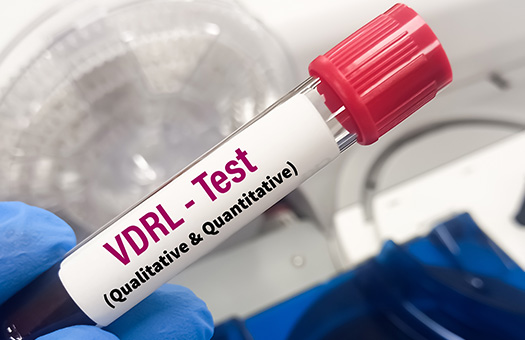
The VDRL (Venereal Disease Research Laboratory) test and the RPR (Rapid Plasma Reagin) test are bothnon-treponemal blood tests mainly used for syphilis, a sexually transmitted infection caused by theTreponema pallidum bacterium. With both of the tests, we do a screening for these infections. Thesetests detect antibodies that are not specifically directed against the bacterium itself but againstsubstances (antigens) released by cells when they are damaged by the infection.
What Is VDRL (RPR) Test Used For?
The VDRL (Venereal Disease Research Laboratory) test and RPR (Rapid Plasma Reagin) test are primarily used for the detection and monitoring of syphilis, a serious sexually transmitted infection (STI) caused by the Treponema pallidum bacterium. These syphilis tests serve multiple important purposes across both diagnosis and disease management.
Why Take a VDRL (RPR) Test?
When Is a VDRL (RPR) Test Performed?
A healthcare provider may recommend a VDRL blood test when:
Interpretation of Results (Table)
| TEST RESULT | INTERPRETATION |
|---|---|
| Non-reactive | No signs of syphilis infection |
| Reactive | Possible syphilis infection (requires confirmation) |
| Weakly Reactive | Low-level antibody presence, needs further testing |
Difference Between VDRL and RPR Test
The difference between VDRL and RPR test is primarily in the test technique and sample type:
| TEST RESULT | INTERPRETATION |
|---|---|
| Non-reactive | No signs of syphilis infection |
| Reactive | Possible syphilis infection (requires confirmation) |
| Weakly Reactive | Low-level antibody presence, needs further testing |
Procedure of VDRL (RPR) Test
How It Works:
When a person is infected with syphilis, their immune system produces reagin antibodies in response tothe damage caused by the infection. The VDRL test and RPR test both check the presence of theseantibodies in a blood sample or sometimes cerebrospinal fluid in suspected cases of neurosyphilis.The tests do not identify T. pallidum straightforwardly; they are useful as first-line screening tools. If atest result comes back positive or "reactive," it usually needs to be confirmed by a treponemal test (likeFTA-ABS or TPHA), which directly detects the syphilis bacterium.
Importance of the Test:
The VDRL (RPR) test plays an important role in detection in the early stage. Syphilis can progress via various stages, like primary, secondary, latent, and tertiary, with increasing severity. Diagnosis in the early stage and treatment are important, and it is always helpful to catch the infections before they get severe. Syphilis can damage the heart, brain, and other organs and may even be fatal if it is left untreated. Moreover, in early stages, syphilis can be asymptomatic; people may transmit it to their partners unknowingly. That’s why regular screening with the VDRL blood test or RPR test is highly recommended for at-risk individuals.
What Does VDRL (RPR) Test Measure?
The VDRL test and RPR test measure antibodies known as reagin. These antibodies are produced in response to cellular damage caused by the syphilis infection, not to the bacterium itself.
Risk Associated with VDRL (RPR) Test
Book a VDRL Test
| City Name | Price (₹) | |
|---|---|---|
| Delhi - NCR | ₹100 | |
| Jaipur | ₹100 | |
| Kolkata | ₹130 | |
| Hyderabad | ₹140 | |
| Lucknow | ₹150 | |
| Chennai | ₹170 | |
| Patna | ₹170 | |
| Chandigarh | ₹170 | |
| Raipur | ₹170 | |
| Jammu | ₹170 | |
| Ranchi | ₹170 | |
| Dehradun | ₹170 | |
| Mumbai | ₹170 | |
| Bangalore | ₹170 | |
| Agartala | ₹170 | |
| Gandhinagar | ₹170 | |
| Srinagar | ₹170 | |
| Shimla | ₹190 | |
| Bhopal | ₹190 | |
| Panaji | ₹190 | |
| Pondicherry | ₹190 | |
| Dispur | ₹250 | |
| Thiruvananthapuram | ₹250 | |
| Bhubaneswar | ₹250 |
Frequently Asked Questions (FAQs) about VDRL (RPR) Test
1. What is the VDRL test used for?
The VDRL test is used to screen for syphilis, a sexually transmitted infection. It helps in detecting antibodies that develop in response to the syphilis-causing bacteria, Treponema pallidum.2. Is the VDRL test the same as the RPR test?
Both the VDRL test and RPR test are non-treponemal tests used for syphilis screening. While they work on similar principles, they differ slightly in technique.3. Do I need to fast before a VDRL blood test?
No, fasting is not required for a VDRL blood test. You can eat and drink as usual before giving your sample.4. Why is the VDRL test done during pregnancy?
A VDRL test during pregnancy helps detect and treat syphilis early to prevent the infection from being passed on to the baby, which can lead to stillbirth, miscarriage, or congenital syphilis.5. Is it painful to get a VDRL blood test done?
The procedure involves only a small needle prick to draw blood and causes minimal discomfort.6. What are the symptoms that may lead a doctor to recommend a VDRL or RPR test?
A doctor may suggest a VDRL test or RPR test if you show symptoms of syphilis, such as painless sores, rashes on palms or soles, swollen lymph nodes, fatigue, or neurological issues in later stages.7. Can the VDRL test detect early syphilis?
Yes, the VDRL blood test can often detect syphilis during its early stages. However, in some cases, especially very early or latent stages, a specific syphilis test may be needed to confirm the diagnosis.8. Is the VDRL test safe during pregnancy?
Absolutely. The VDRL test during pregnancy is completely safe and essential. It helps protect both the mother and baby from complications associated with untreated syphilis.9. Can I take the VDRL or RPR test at home?
While sample collection for the VDRL test typically requires a trained phlebotomist, you can book the test from home through online platforms which offer at-home blood collection services.
Packages With Above Test
Name
Test Details
Price
Antenatal Screening
Tests Included: 54
click for details
Jaanch Womens Hairfall Screening Advanced
Tests Included: 30
click for details
TPL Bride Panel
Tests Included: 2
click for details
STD Package
Tests Included: 0
click for details
Jaanch STD Profile Basic
Tests Included: 0
click for details
Jaanch Womens Hairfall Screening Advanced
Tests Included: 30
click for details
Jaanch Womens Hairfall Screening Advanced
Tests Included: 30
click for details
Jaanch Womens Hairfall Screening Advanced
Tests Included: 30
click for details
Jaanch Womens Hairfall Screening Advanced
Tests Included: 30
click for details
Jaanch Womens Hairfall Screening Advanced
Tests Included: 30
click for details
Conclusion
The VDRL test and RPR test are crucial diagnostic tools for early detection and management of syphilis, a potentially serious but treatable sexually transmitted disease. Whether you're undergoing routine screening, monitoring treatment, or taking precautions during pregnancy, these tests play a vital role in preventing long-term complications and protecting both individual and public health. Understanding the difference between VDRL and RPR test methods can help patients and clinicians choose the most suitable option based on specific needs. Affordable and widely available, the VDRL blood test is simple, quick, and safe—making it an essential part of STD detection programs. In fact, the VDRL test for STD detection is often included in general health checkups and antenatal screenings. For expectant mothers, the VDRL test during pregnancy is critical in ensuring the health of the unborn child by identifying and treating syphilis early. To know more about your sexual health or to book the test, compare labs, and check the VDRL test cost, you can visit trusted healthcare platforms. Early detection saves lives—don’t delay a test that can make all the difference.