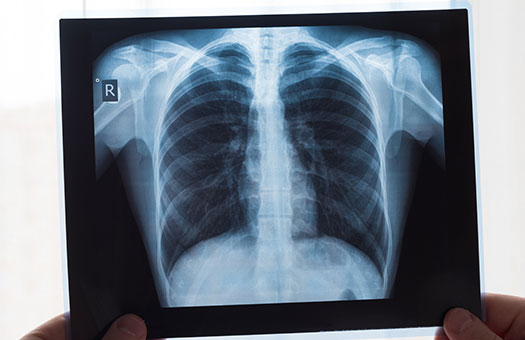
X Ray Chest AP

When you break a rib or when your bones crack, have you ever wondered why your doctor ordered an X-ray? And there are different types of X-rays, such as chest X-rays and AP. But what does that actually mean? Let’s break it down. A chest X-ray AP is a scan that creates an image of your chest, including heart, lungs and bones. This scan visualizes different parts of your chest and shows the affected organ via 2D images. Here, the ‘AP’ stands for anteroposterior, which means that the X-ray beam passes through the front-to-back direction through the chest. In this view, the X-ray beam enters from the front and exits through the back. The ‘AP’ view is helpful when a person is not able to stand up or sit properly for their X-ray. It helps doctors find out if there are any problems like infection, fluid, or injury inside the chest or other related parts. The test is quick and painless. The chest X-ray AP is commonly used in emergency cases. This test helps the radiologist to see the inside view of the chest, lungs, heart and your bones clearly. The chest X-ray AP is different from the ‘PA’ view because in ‘PA’ view, doctors see the front-to-back view and it is more helpful to see the size of the heart.
Types of Chest X-ray (AP View)
The different types of chest X-ray AP are supine and semi-erect. In X-ray AP supine, the patient needs to lie flat on their back, whereas in a semi-erect position, they will partially recline or sit up in bed, but not fully upright. The choice between the two depends on the condition of the patient.
Difference between AP Chest X-ray and PA Chest X-ray
Understanding the difference between the two of them is important to understand why and how they are used.
1.AP View (Anteroposterior)
2.PA View (Posteroanterior)
When and Who Needs to Take an AP Chest X-Ray?
Your doctor may order a chest X-ray AP view for the patients for several reasons, especially for patients who are unable to move. Let’s understand the majority of reasons when a chest X-ray AP is ordered.
Who Needs It?
Common Illnesses & Conditions Diagnosed:
Preparing for the Test
The price range of the X-ray scan varies from city to city and lab to lab. Generally, the cost of this scan starts from ₹250 to ₹600, but a premium may be charged for this scan. The final cost can vary based on the city, lab, and whether it's done on a portable machine (such as in ICUs or at home). It's always a good idea to compare labs and choose the one that best fits your budget and location. If your treatment is covered by medical insurance, you may be eligible for a rebate on this test.
Book a X Ray Chest AP Test
| City Name | Price (₹) | |
|---|---|---|
| Delhi - NCR | ₹250 | |
| Lucknow | ₹300 | |
| Jaipur | ₹350 | |
| Dehradun | ₹350 | |
| Kolkata | ₹440 | |
| Chennai | ₹440 | |
| Hyderabad | ₹440 | |
| Mumbai | ₹440 | |
| Bangalore | ₹440 | |
| Gandhinagar | ₹440 | |
| Thiruvananthapuram | ₹440 | |
| Patna | ₹500 | |
| Chandigarh | ₹500 | |
| Raipur | ₹500 | |
| Ranchi | ₹500 | |
| Agartala | ₹500 | |
| Pondicherry | ₹500 |
Frequently Asked Questions/FAQs
1. What is a Chest X-ray (AP View)?
A Chest X-ray AP view is a scan where X-rays pass from the front of the chest to the back to create an image of the lungs, heart, and chest bones and check for any injury inside these body parts.2. Why is the AP view used instead of the standard PA view?
The AP view is used when the patient cannot stand or sit upright, if they are in an emergency, in the ICU, or in a bedridden situation.3. How long does the test take?
The total process may take around 10–15 minutes, including preparation.4. Is it safe during pregnancy?
Chest X-rays involve low radiation, but pregnant women should inform the doctor so that precautions or alternatives can be considered.5. What conditions can this X-ray detect?
It helps detect conditions like pneumonia, fluid in the lungs, broken ribs, lung infections, enlarged heart, and more.6. Do I need to fast before a Chest X-ray?
No fasting is required. You can eat and drink normally unless your doctor advises otherwise for another test.7. Can I get this test at home?
Yes, some diagnostic centres offer portable X-ray services at home, especially useful for elderly or immobile patients.
Conclusion
A Chest X-ray (AP View) is a quick, painless and effective imaging test that helps doctors examine the heart, lungs, and chest area, especially in patients who are unable to stand or sit upright. It plays a vital role in diagnosing a wide range of conditions like infections, fluid buildup, rib fractures, and heart enlargement. Whether used in emergencies or for bedridden patients, this test provides essential insights for timely treatment. Always consult a healthcare provider to understand the right type of X-ray needed based on your condition. Schedule your X-ray at a trusted lab near you. Choose from top-rated diagnostic centers and book your appointment at an affordable price.