



Feeling Fine? Here’s Why Your Health Still Deserves a Checkup
The alarm rings. You snooze it twice. Rush through breakfast, spend hours staring at your screen, grab another cup of coffee and promise yourself you’ll sleep early tonight.
Sound familiar? Now think about the last time you checked your health. Not because you had a fever. Not because something was hurting. Not because your doctor asked you to. Just because you wanted to know how your body was doing.
For most of us, that answer takes a little longer.
We track our steps, count our calories, monitor our screen time and even check our phone’s battery health. But when it comes to our own bodies, we often wait for a warning sign.
Here’s something worth remembering: feeling healthy and knowing you’re healthy aren’t always the same thing.
Certain conditions, such as high cholesterol, diabetes and early kidney disease, can develop without obvious symptoms. That’s why understanding your health through appropriate preventive screening can be valuable and it doesn’t always have to begin with something complicated. Sometimes, the first step is as simple as discussing a full body checkup or a few essential blood tests with your healthcare provider.
The Health Checkup You’ve Been Putting Off
Imagine this.
You’re 30, working full-time, travelling when you can and trying to balance your career, social life and personal commitments. You feel tired sometimes, but who doesn’t? You get the occasional headache, but it’s probably because of your laptop. You haven’t had a blood test in years, but there’s no reason to worry. Right?
Not necessarily.
While everyday symptoms such as tiredness and headaches often have common explanations, some medical conditions can go unnoticed in their early stages.
A Full Body Health Checkup can help assess selected health indicators and identify results that may require further evaluation. The important thing to understand is that a full body checkup isn’t a test for every possible disease. It’s a collection of investigations designed to examine particular aspects of your health and the right combination of tests depends on your age, medical history, symptoms and risk factors.
Start With the Basics: What Is a Basic Health Package?
When you search for a full body checkup online, you’ll probably come across numerous health packages with different prices and long lists of tests.
But more tests don’t automatically mean better healthcare.
A Basic Health Package generally combines selected laboratory investigations that offer an overview of important health parameters.
Depending on the package, these may include tests related to:
- Blood cell counts and haemoglobin levels.
- Blood sugar regulation.
- Cholesterol and triglycerides.
- Liver health.
- Kidney function.
For example, a CBC blood test can help identify certain blood-related abnormalities, while a kidney function test may provide information about how effectively your kidneys are filtering waste.
Instead of choosing the package with the longest test list, look for one that matches your individual health needs and your doctor’s recommendations.
Want to explore a starting point? Check out Flebo’s Basic Health Package and review the tests included before booking.
The CBC Blood Test: Because Your Blood Can Tell an Important Story
Let’s go back to that constant tiredness you’ve been blaming on late nights.
Sometimes, fatigue really is caused by poor sleep, stress or an exhausting schedule.
But sometimes, your doctor may want to investigate possible medical explanations, including anaemia.
This is where a CBC Blood Test, or Complete Blood Count, can be useful.
A CBC evaluates several components of your blood, including:
Red Blood Cells (RBCs): These carry oxygen throughout your body. Lower-than-expected levels may be associated with anaemia.
White Blood Cells (WBCs): These play an important role in fighting infections and supporting your immune system.
Haemoglobin: This oxygen-carrying protein helps doctors assess possible anaemia and related conditions.
Platelets: These are essential for normal blood clotting.
A CBC blood test can help doctors investigate symptoms such as unexplained fatigue, weakness, prolonged fever or unusual bruising.
However, abnormal results don’t automatically confirm a particular disease. They need to be interpreted alongside your symptoms and medical history.
Do You Need to Fast for a CBC Blood Test?
Usually, no. A CBC performed on its own generally doesn’t require fasting.
If your doctor has recommended additional tests at the same time, different preparation instructions may apply.
You can explore the CBC Complete Blood Count Test on Flebo to check available diagnostic options.
Your Kidneys Are Working Even When You’re Not Thinking About Them
Now here’s something we rarely think about.
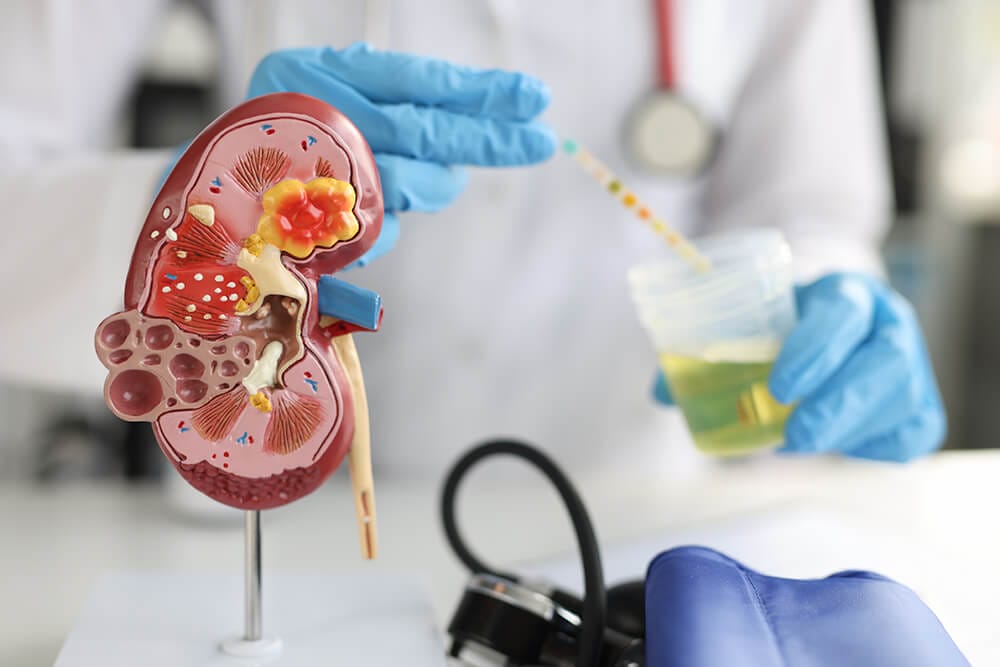
Your kidneys filter waste products from your bloodstream, help regulate fluid balance and support several essential functions in your body.
And they do all of this without demanding much attention.
Until something goes wrong.
The challenge is that early kidney disease may not cause noticeable symptoms. People with diabetes, high blood pressure or a family history of kidney problems may benefit from regular monitoring as advised by their healthcare professional.
What Is a KFT Test?
A KFT Test, short for Kidney Function Test, measures selected indicators associated with how effectively your kidneys are working.
Depending on the laboratory panel, it may include:
- Serum Creatinine: A waste product used to help assess kidney filtration.
- Blood Urea: A measurement influenced by kidney function, hydration and other factors.
- Estimated Glomerular Filtration Rate (eGFR): A calculated estimate of kidney filtration.
- Electrolytes: Certain kidney panels also measure sodium, potassium and other important minerals.
A KFT helps doctors identify abnormalities that could indicate kidney-related concerns.
It is particularly relevant for people with certain risk factors, although a blood test alone may not provide the complete picture. Urine testing and additional investigations are sometimes required.
When Should You Consider a KFT?
Your doctor may recommend a KFT if you have diabetes, high blood pressure, existing kidney disease or take certain medications that require monitoring.
Symptoms such as unexplained swelling or changes in urination may also need medical evaluation.
You can explore the KFT Kidney Function Test on Flebo to understand the available testing options.
And What About That Persistent Headache?
Here’s where preventive health checks and symptom-based investigations take different paths.
Imagine you’ve been experiencing recurring headaches.
You try sleeping earlier, drinking more water and reducing your screen time. But the headaches keep returning.
After evaluating your symptoms and examining you, your doctor might recommend further investigation.
In certain situations, that may include an MRI brain scan.
What Is an MRI Brain Scan?
Magnetic Resonance Imaging, commonly called MRI, uses a powerful magnetic field and radio waves to create detailed images of the brain and surrounding structures.
Doctors may recommend it to investigate certain neurological symptoms or conditions, including suspected structural abnormalities, seizures and some neurological disorders.
However, an MRI is not required for every headache. Many headaches can be evaluated and managed without brain imaging.
An MRI brain scan is also not a routine component of a basic full body health checkup.
What Is the MRI Brain Scan Cost in India?
If you’ve been advised to undergo the scan, one of your first questions may be: How much does an MRI brain scan cost?
The price varies depending on several factors:
- Your city and diagnostic centre.
- Whether the scan requires contrast.
- The imaging protocol prescribed.
- The equipment and services included in the booking.
A contrast-enhanced MRI may cost more than a standard non-contrast scan.
It’s important to confirm the prescribed scan type and the final cost before booking.
With Flebo, you can explore MRI Brain Scan booking and pricing options based on availability.
Important: Sudden severe headaches, new weakness, speech difficulties or other emergency neurological symptoms require immediate medical attention rather than waiting for a routine scan appointment.
The Best Part? Some Health Tests Can Come to You
We’ve all said it at some point.
“I’ll get it done this weekend.”
And then the weekend arrives. There are errands to finish, plans to make and a hundred other things that suddenly seem more urgent.
For many people, the biggest obstacle to getting a blood test isn’t the test itself.
It’s finding the time.
That’s where Blood Test at Home services can make a difference.
With home blood sample collection, a trained professional can visit your location, collect an eligible sample and arrange for it to be processed at a diagnostic laboratory.
This can be especially convenient for working professionals, older adults, people with mobility difficulties and individuals who require regular health monitoring.
Which Blood Tests Can Be Collected at Home?
Depending on service availability and laboratory requirements, home sample collection may be possible for:
- CBC blood tests.
- Blood sugar tests.
- Kidney function tests.
- Lipid profiles.
- Thyroid function tests.
- Blood group tests.
Speaking of blood groups, here’s another health detail many people don’t know about themselves.
Do You Know Your Blood Group?
A+, B−, O+, AB−.
You’ve probably seen these letters on medical forms or blood donation requests.
But do you know yours?
The Blood Group ABO and Rh Factor Test identifies your blood type and whether your blood is Rh-positive or Rh-negative.
Knowing your blood group is important for medical planning, particularly in pregnancy care and situations involving transfusions or certain surgical procedures. Healthcare facilities still perform the necessary compatibility checks before blood transfusions.
The test is simple, generally doesn’t require fasting and can be performed using a blood sample collected by a qualified professional.
If you’ve been meaning to confirm your blood type, you can explore the Blood Group ABO and Rh Factor Test on Flebo and check home sample collection availability.
So, Which Health Test Do You Actually Need?
After reading about all these tests, it’s tempting to think you should book everything at once.
But that’s not necessarily the right approach.
The goal of preventive healthcare isn’t to undergo every available investigation. It’s to understand which tests are appropriate for you.
Here’s a simple way to look at it.
| Health Concern or Requirement | Test Your Doctor May Consider |
| General health risk assessment | Relevant tests from a Basic Health Package |
| Unexplained fatigue or suspected anaemia | CBC Blood Test |
| Kidney health monitoring | KFT Test, sometimes with urine tests |
| Certain neurological symptoms | MRI Brain Scan, if clinically indicated |
| Knowing your blood group | ABO and Rh Factor Test |
| Convenient sample collection | Blood Test at Home for eligible tests |
Each investigation serves a different purpose, and no single test can provide every answer about your health. Your Health Doesn’t Need to Become a Problem Before It Becomes a Priority Think about how much effort goes into planning everything else in life. We plan holidays months in advance. Set reminders for subscriptions. Book car services. Keep track of deadlines.
Yet our own health is often left somewhere at the bottom of the list. That doesn’t mean you need to start booking every medical test you can find. It means paying attention to your symptoms, understanding your risk factors, attending recommended screenings and seeking medical advice when something doesn’t feel right.
A full body checkup may help assess selected health indicators. A CBC can provide information about your blood cells. A KFT can support kidney function assessment. An MRI can help investigate certain neurological concerns. And home blood sample collection can make eligible tests easier to fit into your schedule.
With Flebo, you can explore diagnostic tests, compare available options and find services suited to your needs. Because prevention isn’t about expecting something to go wrong.
It’s about giving your health the attention it deserves, even when everything feels right. Explore health packages and diagnostic tests at Flebo.in.
Prevention Made Painless.
Frequently Asked Questions (FAQs)
- What tests are included in a full body checkup?
A full body checkup typically combines laboratory tests that assess selected health indicators, such as blood cell counts, blood sugar, cholesterol, liver function and kidney function. The exact tests depend on the package selected. A full body checkup does not automatically include imaging investigations such as an MRI brain scan.
- What is the difference between a Basic Health Package and a Full Body Health Checkup?
A Basic Health Package generally focuses on selected essential health parameters. A more comprehensive Full Body Health Checkup may include additional investigations. The appropriate package depends on your health needs, medical history and your doctor’s recommendations.
- What is a CBC blood test used for?
A CBC blood test measures red blood cells, white blood cells, haemoglobin, haematocrit and platelets. It helps doctors investigate conditions such as anaemia, infections and certain blood disorders, as well as monitor the effects of some treatments.
- What is a KFT test, and why is it important?
A KFT, or Kidney Function Test, assesses selected indicators of kidney function, including creatinine and urea. It helps doctors investigate possible kidney problems and monitor people with conditions such as diabetes, hypertension or existing kidney disease.
- How much does an MRI brain scan cost in India?
MRI brain scan costs vary by city, diagnostic facility, scan protocol and whether contrast is required. You can explore current options on Flebo and confirm the final amount before booking.
- Can I book a blood test at home?
Yes, many routine blood tests can be performed using home sample collection services. A trained professional collects the sample at your location, and it is then analysed at a laboratory. Availability depends on your location and the specific test.
- Is fasting required for a full body checkup?
It depends on the investigations included. Certain tests may require fasting, while a CBC or blood group test generally does not. Follow the preparation instructions provided for your selected tests.
- How often should I get a full body health checkup?
There is no universal testing schedule for every adult. The need for tests depends on factors such as age, medical history, family history, current conditions and individual risk factors. Consult your healthcare provider about the appropriate screening frequency.
- Can a CBC and KFT test be done together?
Yes, a doctor may recommend CBC and KFT testing together when appropriate. Both commonly use blood samples, although they measure different health parameters.
- Can I book diagnostic tests and health packages online through Flebo?
Flebo provides options to explore health packages and individual diagnostic tests, including CBC, KFT, MRI brain scans and blood group testing. Pricing, appointment availability and home collection options may vary by location and service provider.
- Is an MRI brain scan included in a basic health checkup?
Usually not. MRI scans are specialised imaging investigations and are generally ordered for specific medical indications. They should not be assumed to be part of a routine health package.
- How do I choose the right health checkup package?
Start by considering your age, existing conditions, symptoms, family history and medical advice. Review the individual tests included in the package rather than choosing solely by the number of tests or the advertised price.

Most Popular






 012 44 55 0000
 www.flebo.in